New Films from Two Defining Voices of Contemporary Japanese Cinema
First up is Sheep in the Box. Hirokazu Kore-eda has long been one of my favorite directors. His features often focus on themes of found family whether that’s with a child that is not your own like in Like Father, Like Son or a family of thieves that comes together in his award winning Shoplifters. Over the last two decades, Kore-eda has been prolific, releasing a new feature film on a yearly schedule. His newest, Sheep in the Box, is actually his first of two movies coming out in 2026. It premiered at the Cannes Film Festival to tepid reviews, but given my history with the director, I had to check it out for myself.
Probably the biggest element that Sheep in the Box has against it, is that the feature film A.I. Artificial Intelligence exists. Kore-eda focuses on a family reeling from losing their child two years earlier and making the decision to welcome an android replica of the child they lost into their home. Otone (Haruka Ayase) quickly connects with her robotic son, allowing this new appliance to fill the loss in her heart. Meanwhile, Kensuke (Daigo Yamamoto) is much more hesitant to bond with the android. Most of Sheep in the Box is focused on how loss affects us as humans, as we cling to past mistakes, blame others, and desperately try to find answers. But Kore-eda doesn’t solely point his lens towards the grieving parents, he also follows the android Kakeru as he begins to operate outside of his initial programming. A lot of this material frankly doesn’t work as it comes across as some kind of Peter Pan fantasy where the lost boys must go to a home that suits them. Given Kore-eda’s batting average over the last two decades, I’m willing to give this miss a pass. But Sheep in the Box is a story we’ve seen many times before and done better. [C-]
Another film that premiered at the Cannes Film Festival was Kiyoshi Kurosawa’s The Samurai and the Prisoner. Kurosawa is best known for his J-Horror classics like Cure and Pulse, but has also seen success with his film Cloud in recent years. All this is to say, The Samurai and the Prisoner is a big departure for the director, but he proves that he’s up to the task.
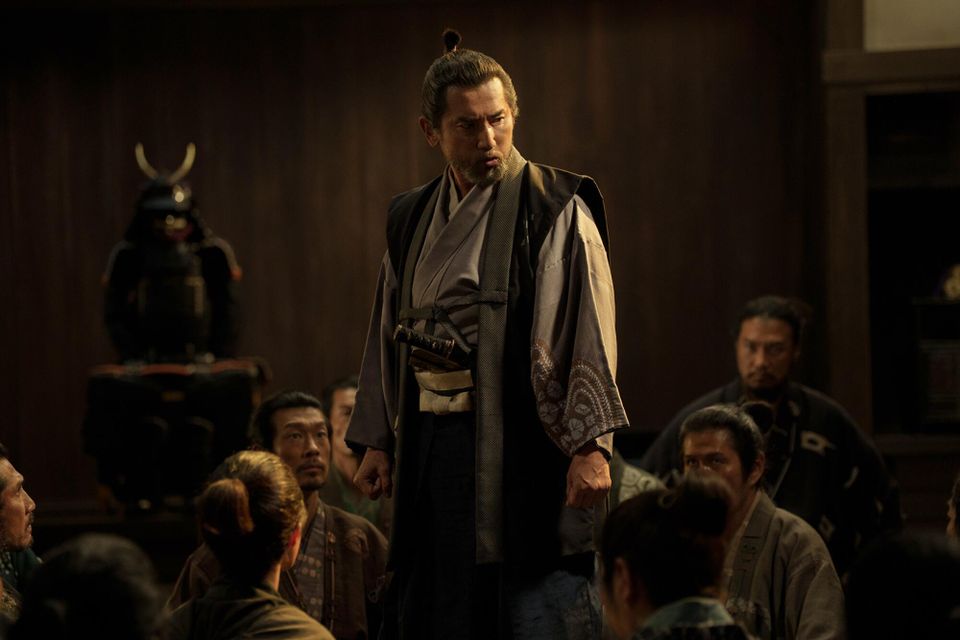
Set in the 16th century, The Samurai and the Prisoner follows Lord Murashige Araki (Masahiro Motoki) as he desperately tries to defend Arioka Castle from the bloodthirsty warlord Oda. He hasn’t gotten to his position by accident– he has plenty of cunning and the respect of all those that follow him. When an opportunity allows him to take Kanbei Kuroda (Masaki Suda) hostage, he doesn’t falter. The only issue is that he was supposed to murder Kuroda for being from a rival clan. Actually time and time again, Murashige Araki abandons samurai code and refuses to kill. It’s an admirable idea, but in this time of war and killing, those loyal to him begin to question his commitment.
After the initial setup, The Samurai and the Prisoner could be mistaken for a mini-series. It’s separated into four distinct seasons or in this case, mysteries. First, Murashige is tasked with solving the murder of a child, who he ordered to be imprisoned, not murdered. Then other mysteries start piling up. Surprisingly, Murashige goes to the only person who he thinks he can trust for answers, the prisoner Kanbei Kuroda. This formula repeats a few times before culminating into a satisfying climax. Despite the significant runtime, I was never bored watching The Samurai and the Prisoner, and a lot of that is due to the production and cinematography. This is a stunning film to look at with Kurosawa and his Director of Photography Yasuyuki Sasaki capturing the period with stunning accuracy. I don’t often want to pause a film to take in the atmosphere, but I absolutely contemplated it here. I’m not as familiar with Kurosawa’s other features, but if they convey even a fragment of the artistry on display in The Samurai and the Prisoner, I’m excited to check them out. [B]
Member discussion